

The Agile Shetland Sheepdog: Entering Training Competitions

July 3rd, 2009

If you are looking for a fun and competitive way to exercise with your Shetland Sheepdog, pursuing agility training is your best bet. Like all herding breeds, Shelties excel in test of agility because of their intelligence, speed, and dexterity. Training for agility trials is a fantastic bonding experience for you and your pet, as well! You will find that not only will your pet bond with you, he or she will also listen much more intently with day to day commands.

If you are just becoming interested in agility training or competition,

it is advisable to consult your local branch of the AKC to see if there are any agility or Shetland Sheepdog clubs in your area. These clubs can offer helpful training seminars, novice competitions, and general advice and support. They can also offer other resources for training, such as regulation courses and obstacles. All of these clubs will have specific rules so it’s important to brush up on your reading before you start training so it’s done correctly from the beginning.

The actual agility course is made up of several basic obstacles which can vary from competition to competition. These include hurdles, cloth tunnels, A-Frames, seesaws, the dog walk (a plank raised approximately four feet above the ground), and other obstacles depending on ability, club, and region. Dogs are tested based on proficiency and time. The owner, as the handler, will run alongside the dog in the course, directing him verbally or with hand motions. Treats and other motivational gifts are not allowed on the course and will lead to immediate disqualification, so it is best to phase these out of the training process after your dog learns to master each individual obstacle at home. Dogs are judged on their completion of the course as a whole as well as the proficiency with which they tackle each obstacle.

When you are just starting out, you may feel somewhat intimidated by other competitors, but remember that everyone else and their dogs started out at your level! There are plenty of novice competitions you can enter your pet into, and it always helps to watch and learn from the tactics and techniques of other trainers and handlers. As your dog becomes more skilled at the course and your handling of him or her becomes more confident, you can begin to challenge him with other obstacles, longer courses, and different levels of competition.

Shetland Sheepdogs, being such an intelligent and athletic breed, need to have challenges and stimulation on a day-to-day basis. Training for and competing in agility trials are a fantastic way to go about this. It is a great way to create a stronger bond with your dog, strengthen obedience commands and trainability, and get a lot of exercise for your pet and yourself. The Sheltie loves nothing more than to please his or her owner, so you will probably find that it is very easy to train him or her on the agility course. The sport can become rather addictive once you conquer the first couple obstacles!

Cropped Ears And The Doberman Pinscher

July 3rd, 2009

Just as the Doberman Pinscher is born with a thin, fragile tail that is typically cropped, this breed is also born with medium length ears that are floppy. However, the Doberman is usually recognized as having pointed ears. How do they get those? They get those from a cropping procedure which is rather like a cosmetic make-over. If you are researching the Doberman Pinscher, you should definitely know about this procedure and make your own decision.

The ear crop procedure is actually a surgery done under general anesthesia with all the pre surgery requirements. It is done when the Doberman is around two months of age and is a rather involved procedure from start to finish and requiring more than just the surgery. Surgery itself takes less than an hour. The surgery includes cutting and suturing the ears. Then the ears are protected by a cup until the stitches are removed and healing is completed. After all this, the Doberman’s ears have to be taped into the upright position without tape and this can take anywhere from 4 months to a year.

A Doberman Pinscher owner is usually able to choose which of three ear styles he would like to have. The choice includes the short military crop which is short with a wide base. Next is the medium crop, somewhat longer with a smaller base. Last is the show crop which is the longest ear which is longer yet with a small base.

As with tail cropping, ear cropping has come into disfavor, developing a more and more negative connotation and impressions that such cosmetic surgery is really not an ethical procedure for veterinarians to be doing. In fact, there are numerous countries such as South Africa, Norway, Sweden, the United Kingdom, New Zealand and Australia. Ear cropping is still legal in the United States. However, even though when you read the standards for the Doberman Pinscher it describes the ears as erect and cropped, owners will find fewer and fewer veterinarians who are familiar with and will do the procedure.

Therefore, if you wish to acquire a Doberman Pinscher for show purposes, you may have a hard decision to make regarding the ear cropping. You will definitely need to secure some consultation from vets and breeders about the positives and negatives of the cropping procedure. You will need to learn about the rather lengthy procedure, your involvement in the procedure and finding an experienced veterinarian willing to do the procedure.

Is A Poodle Truly A Spoiled Brat?

July 3rd, 2009

One glance at a Poodle, especially show Poodles in competitive events, and many people get the impression that Poodles were merely bred to be the pampered, spoiled, high maintenance brats of the dog world. The extravagant hairstyles that Poodles are known for, are one of the main factors lending to the idea that Poodles can be bratty divas. Is it true? Are they a dog breed that loves to lounge around in the lap of extreme luxury? The question actually has no clear-cut answer.

Lets for a moment, take a look at the haircut. The Poodle hairstyle just screams out to be looked at and it is hard not to think of the dog being a bratty diva when you see a Poodle with pompoms around its ankles and at the tip of its tail, not to mention the dainty little ribbon fastened to its head. But was the hair of a Poodle cut this way to merely make the Poodle stand out? No. The original Poodle haircut had the purpose of protecting the dog from cold water while at the same time allowing for ease of movement in the water; as they were originally bred to be water dogs.

If you take a closer look at a water dog, specifically the Portuguese Water Dog, you will notice this breed has a shaved posterior area, with a bit more hair left at the tip of the tail. Water dogs use their back legs to propel through the water by kicking; excessive fur on the back legs and hip area weighs the dog down and makes the act of kicking harder. The “pompom” on the tip of the tail allows a handler to more easily keep track of the dog, especially if the dog dives under water. Some of the hair is left on the joints (the Poodle leg pompoms for example) to protect them from the cold water and lowers the risk of arthritis developing.

While the Portuguese Water Dog might look like a Poodle, it does not have the extravagant haircut that a Poodle has. This is because Poodles did become popular stars in their history and made quite a bit of money for performing their tricks. In France and through parts of Europe, gypsies and circus performers took advantage of a Poodles intelligent and desire to please, and trained them to perform amazing acts for circuses and street fairs. They began to exaggerate a Poodles hairstyle giving them elaborate makeovers, much to the delight of the crowds. Poodles that were gifted performers were bred together to create a new generation of actors and actresses. The history of theatrical arts has remained at the heart of the Poodle breed; many walk through the show ring or stroll through their neighborhood with an air of self-importance, they seem to be under the distinct impression that they are the center of the whole universe.

Though Poodles were not born and bred to be spoiled, bratty, diva dogs, they do take on the role with great enthusiasm. Poodles are very intelligent and loving; they are emotionally needy, clingy and demand constant and undivided attention. Some Poodles have a tendency to be high-strung. Historically speaking though, Poodles have illustrated themselves to be amazing working dogs and companions that are loving, loyal, and hard-working, especially when they have a wonderful home. Ultimately, there is much more to a Poodle than ravishing good looks and a haughty demeanor.

Taming Unwanted Behavior In A Shih Tzu

July 3rd, 2009

If there is one thing that drives any dog owner to the brink of insanty, it is excessive barking and Shih Tzu owners are no different. When something gets them riled up, these tiny dogs can really get working up into a frenzy of barking. If the owner is not there to deter it, the noise could go on for long periods of time. By gently training and using positive reinforcement with your Shih Tzu, you should be able to yield great results.

While it is worth your while to have an alert Shih Tzu to warn you when something is not right, until they learn what ordinary means by your direction, there will be a bti of confusion and much noise. When there is something you do not want them to bark at, use a very calm voice and tell them no. When it is appropriate to give praise and let them know not to bark anymore, now that you know what the situation is.

Using reward training is generally preferable over punishment, though sometimes you might need to get your Shih Tzus attention when they are worked up into a barking frenzy, this can best be accomplished by using a clicker or squirting with a water bottle. You make make your own simple noise maker by putting unpopped popcorn or pennies into a tin or aluminum can and sealing it up.

In addition to bark, a Shih Tzu may have the horrible habit of whining when left along for any period of time. Exercising the dog is a good way to curb this behavior, however this amounts to quite a bit of walking throughout the day. Playing fetch with a stick or a ball provides good exercise and some dogs truly love it. Sometimes its hard to make sure your Shih Tzu gets enough exercise daily to curb the bad behavior. Walking about a half-mile should suffice. Having two dogs at once can also solve this dilema, as long as you make it known to the dogs you are the alpha human, you should have no trouble being the boss.

When considering things from a dogs perspective, the actions of humans are not easily understood much of the time. When it comes to behavioral training, you should be a gentle, firm, instructional, loving teacher and leader. You should teach all the members of your family to not startle a dog that is easily driven by fear and adrenaline. This could be something as simple as yelling or people who wear hats, but until a dog understands something is okay, they are going to get themselves all worked up.

Perhaps one of the most concerning tendency in a Shih Tzu is to engage in biting out of fear. This is a common occurrence in smaller dogs than in larger ones, but this type of behavior is most often associated with dogs that have either been poorly socialized as pups or a victim of physical or verbal abuse.

Having your Shih Tzu puppmy meet a wide variety of people, other dogs and situations when they are younger encourages them to be unafraid, especially if you are overly cautious about situations where to dog may be injured. This does not mean you should snatch up your dog on the street when you see a larger dog approaching. It means to ask permission from theh person who owns the dog, whether the dog is friendly or not and simply walking on the opposite side, if this is not the case.

If you show your own fear, your dog will respond and pick up on that fear, because they learn by what they see and experience. Shih Tzus are also very aware and sensitive of their own size. Biting out of fear is also witnessed with fear-induced urinating. Make sure you mind your temper, no matter what the dog has just urinated on, this is instrumental in not making an overly sensitive dog any more frightened.

Thankfully, this also means a Shih Tzu is small enough to simply be physically picked up and put into a crate for a time out to calm down, because this form of behavior is unacceptable. If the dog is very traumatized, it may never be able to overcome it and will always hunger for the attention he or she desires but is to scared to accept. Using soothing words to calm the dog and placing it in a safe place, will be necessary for dogs of this temperament.

The Disposition Of A Miniature Schnauzer

July 2nd, 2009

Many people get the impression that small dogs have a temperamental disposition and bark excessively, and they tend to view a Miniature Schnauzer in the same manner. This is not completely true where a Miniature Schnauzer is concerned. While these dogs love to bark and are very vocal, this behavior can be tempered with the right training and a lot of patience. They can still be a vocal dog, but not become a nuisance because of excessive barking.

The disposition of a Miniature Schnauzer is very loving towards its owners. They are energetic and lively, but at the same time quite affectionate. They have a strong desire for affection and will actually make themselves sick if they feel neglected. Going for walks with their owner makes them quite happy and content. They also love to lay on the couch and snuggle up along side of their owner or on their lap. When it comes time to go to bed, they love to jump up and burrow under the covers to snuggle.

Miniature Schnauzers are very loyal dogs and fiercely protective of their home and family. Though they might be a bit stubborn on occasion, they are very smart and easy to train. They are also quite spunky and energetic around people and other dogs. Miniature Schnauzers should never be around small rodent like animals, because they will try to chase them down and catch them. There is nothing wrong with their lovable nature, it is inherent with the breed. A Miniature Schnauzer will get along well with other pets in the family who have been introduced gradually over a period of time. They also get along great with anyone or anything they deign a playmate, because playing around is a large part of their life.

Wherever his owners go, he will want to follow and behave as such. The breed grows very depressed when left alone for too long because they are very people oriented animals. They are not a dog that does well when left alone for long stretches of time. They are so affectionate and easily adaptable that they can be content living wherever they are, as long as they have their family. They are not overly attached to specific locations as much as they are to their people. They feel they are a valued member of the family and as such, demand to receive affection and be treated well.

Occasionally you will come across a Miniature Schnauzer that harbors aggression, though this is not normal behavior for this breed. The one thing that can be said about the Miniature Schnauzer is that they have their own minds, whether it be in training or play. For this reason, it is recommended that training commences at an early age in life. If you wait to long for training, it will be harder to get them to respond and do what is expected of them, they have to know they are not the alpha in the household. Once they learn this, they will transform into the most wonderful, loving and intelligent family pet.

Shetland Sheepdogs Love Their Playtime

July 2nd, 2009

The Shetland Sheepdog is classified in the AKC Herding Group, which means that it is an intelligent, athletic dog. Though smaller in size, measure just 12 to 16 inches at the shoulder, the Shetland Sheepdog, or Sheltie, has as much energy as many dogs two or three times its size. Shelties need lots of exercise and physical activity, which can be a big bonus if you lead an active lifestyle. They are a very affectionate and social breed and will have the most fun exercising or playing with people or other dogs.

The easiest option to play with your Sheltie is to have a fenced-in back or front yard where you can play fetch or tag with your pup. Shelties are impeccably good at catch, as well, and can be trained to play a mean game of frisbee. Some Sheltie owners have little scavenger hunts with their dogs where they will hide treats around the yard and allow their pet to run around and find them. This is not recommended for city dwellers, however, as trash can easily find it’s way into your yard and you do not want your dog thinking that it’s okay to eat whatever he finds! While your sheepdog will enjoy his or her time running around off the leash, it is important to not leave them unattended in the yard. The breed is quite good at clearing hurdles or digging and could escape.

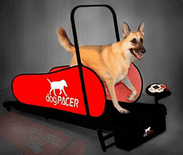
If you are not fortunate enough to have a yard to play with the Shetland Sheepdog in, there are plenty of other options to get them the activity needed to keep them happy and healthy. Taking your Sheltie along for the morning jog or training him or her to run next to your bicycle is a fantastic way to get the much-needed exercise for your dog and for yourself. If jogging or biking is not an every day activity for you, a long, brisk walk can suffice, but they will need more indoor playtime as well.

If you are really enthusiastic about exercising your Sheltie, you can look into some dog sporting events. All herding breeds excel at agility competitions because of their dexterity, speed and intellect. While the trials alone aren’t enough exercise, the training process is rather intensive and can be a great source of exercise for the both of you, as well as a wonderful bonding experience. Finding a Shetland Sheepdog or agility club in your area is a good start to begin agility training, though if you do not plan on competing you can easily build or purchase a course of hurdles, tunnels, and A-frames in your back yard.

The Shetland Sheepdog is an intelligent and playful breed, and is best suited to owners with an athletic or active lifestyle. Your Sheltie will be happy to accompany you on errands or runs, and can even help encourage you to stick with that exercise routine! Getting fit with your new best friend is an experience every dog owner can enjoy. Shetland Sheepdogs love to please and will be a perfect fit for anyones home.

Housebreaking a Dog - Do You Know How ToTrain Your Dog to Ask to Go Outside?

July 2nd, 2009

Housebreaking a dog is very important if you want to live a happy and long life with it. You will need to learn how to properly train it to go outside, and to even ask to go as well. Here you will learn the finer points of how to train a dog to ask to go outside.

The thing you must remember is that a dog will go in the same place over and over again. So, if in the past it had an accident, you need to clean it, and get rid of the odor right away.

It’s best to have a leash when taking your dog out, so get one, and keep it by the door. Not only will it be easy access, but your dog will remember the leash, and know what it’s for.

While your dog is inside, always keep an eye on it. To keep it easy, make sure it only has access to whatever room you are currently in. This way, you will be able to know when it is looking for a place to go.

There are some easy tell tale signs of when your dog wants to go out, the main one and most common one to look for is it will start to sniff around. This is your dog looking for a place to go, this is when you put the leash on, and take it outside.

A major thing you can do is to keep a bathroom break schedule with your dog. As soon as you get up, the first thing you should do is take your dog out for its morning pee. Now, if you can, come home for lunch, and take it out, and again when you come home. One last time should be a quick pee break just before bed.

All these things you just learned, will train your dog to eventually ask you to go out. It will not take time at all, especially if there is a routine involved. Not only will your dog know that it’s time to go out, it will ask you, even if it isn’t time, just that it needs to go.

How To Get Rid Of Fleas In The House

July 2nd, 2009

If you are really  sincere to know about how to get rid of fleas in the house, you will read this article to the end. Not only that, you will  make use of the  suggestion discussed. There are  several  human beings out there  suffering from the problem of fleas in their homes and pets. They only read articles such as this but don’t take action on what they have read. Please, don’t make the same  mistake. Take the necessary action outlined in this article and you will get rid of fleas permanently from your home and pets.

One of the things I  generally tell  human beings like you is the need to have clean vicinity and pets. Remember, we are talking about solving the problem of fleas in your home and on your pets.  Consequently, you need to  confirm that your whole house is very clean, not just clean. If you cannot effectively do this, I urge you to get the  professionals who can do this job well for you. A clean house is  significant to win the battle against fleas on your pets. After ensuring that your whole house is clean, the next thing to do is to clean up your pets and her surroundings. Bathe the pets thoroughly and  make certain that the beddings are washed with hot water. This will help get rid of the fleas and their eggs.

Not many  human beings out there often take the above  suggestion seriously. They are  in quest of over the counter products that can do the job. While it is true that you may get one or two good products, it needs to be stressed that an unclean home and pets will make you to continually lose your hard earned  fund. So, the best thing to do is to clean your home and pets. It is only then that whatever product you bought will work very well in getting rid of the fleas in the house and on your pets.

St. Bernards Are Great For Search And Rescue

July 1st, 2009

In the past, the ancestors of the St. Bernard breed were used as working dogs. This means they were used as herders, hunters and watchdogs on farms, the dog we know today however, was bred for rescue purposes. In fact, the existence of a St. Bernard in popular in folk lore because of this reason, and the dog has become a legend and a mystery. These dogs are very smart and their high intelligence lends them to the specific work they were bred for.

The ancestors of the dog were brought into Switzerland by invading Roman forces around the 1st century C.E. These dog were then bred with native Swiss dogs and formed a breed that was used for farming purposes. These dogs were extremely large in stature and very loyal, in addition they were extremely strong and had a high level of self-awareness. These aspects of the dogs personality made them valuable to the monks in the monastery at St. Bernard Pass. The St. Bernard Monks needed companionship and dogs that could help them in rescue efforts to find snowbound individuals.

It is not exactly known when the dogs were brought to the monastery, however it is believed to be prior to the start of the 18th century, probably in the middle of the 17th century. First reference to the dogs in written form comes in 1707, and paintings dating to around 1660. These tangible records accounts for the assumption that the dogs were used as rescuers by these dates.

The dogs would accompany the St. Bernard monks along the treacherous footpaths of St. Bernard Pass. The monks would take the dogs with them because they had the uncanny knack of being able to sense an impending avalanche and warn the monks. This was another skill useful to the monks in the rescue missions.

In time, groups of dogs 2-3 in numbers would go out sans human companionship. The dogs were trained to locate stranded travelers and dig them out of the snow. One dog would wake the person and then lie on the person to keep their body temperature elevated. Meanwhile, the other dogs would head back to the monastery to bring back monks to assist the person. If the person was able to walk, the dog would then lead them back to the monastery for help.

During the severe weather in the early 19th century, many rescue dogs were killed around St. Bernard Pass. The St. Bernard breed was continued with the assistance of dogs from surrounding locations. The breed was eventually recovered and restored to previous levels before the deaths.

Because a St. Bernard has such strong skills as rescuers, they have become the things legends are made of. There are movies, books and TV shows that showcase this brave, strong dog being the hero he was born to be. We’ve all seen the cartoons of the St. Bernard helping a stranded traveler with the bottle of booze around its neck. While a St. Bernard does not often work in a rescue capacity anymore, the breed still harbors the ability to work in rescue efforts and has an incredible sense of smell.

3 Dog Family Members are Chicken Coop Predators - How to Avoid Them by Planning Your Chicken Coop

July 1st, 2009

Chicken coop predators can be a headache for those raising chickens. 3 members of the dog family make it to list of the top chicken coop predators. Make it a point to know what dog predators you have in your community. From here, you can set up a plan which includes the appropriate measures for dealing with these animals. Here are the top three dogs that are chicken coop predators:

Coyote

As member of the dog family, coyotes are one of the most notorious chicken coop predators and are most active hunting for food at night time. Lately however, coyotes have already adapted to the presence of people and have become active even during day time especially during cooler months. Coyotes usually prey on chickens, geese, ducks, and other fowls. Shooting these predators can be a futile way of preventing them from attacking back. Make sure that you provide a trap or keep the coop coyote-proof.

Fox

Foxes are the next dog family member that is a known predator to poultry birds. They can be highly skilled hunters and primarily nocturnal. Like coyotes, they have also learned recently to hunt during daylight hours. They are very sneaky and intelligent. Foxes normally attack at least 2 hours after sunset or 2 hours just before sunrise. Furthermore, they carry the livestock far away for the owner not to trace it.

Domestic Dogs

The neighborhood dogs are one of obvious predators proven to be very destructive to your livestock. Even your own dog can be potentially a predator if not controlled. Train your very own pet dog not to harm your chickens.

Effective Solutions

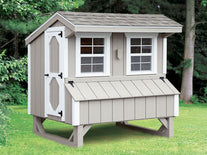
One effective solution to deter these predators is to keep the chickens locked in the coop. The coop should be made of solid wood as well if you want to keep the predators outside. Predators, however, can get tricky and can dig into the ground so make sure that the chicken wire fencing is also planted into the ground. Moreover, ensure that there are no holes where these predators can get in. These animals can enter the chicken house through the small holes and will definitely prey on your pets once they get through into the coop.

In planning your chicken coop, make sure you have the right strategies to avoid these predators getting at your chickens especially the chicks. Know them well and your best bet is to prevent them from entering the coop by making that chicken house predator-proof.